


Out of Sight, Out of Mind: Why Your Furnace Filter Deserves More Attention
By David Higgins, Founder & Realtor at Cush Real Estate | November 13, 2026
I’ll start with a confession. I’ve worked in real estate since 2000, I’ve been part of more than 1,000 transactions, and I spend my days advising homeowners on how to care for and prepare their homes. And yet I have often forgotten to change my own furnace filter.
My system in Crocker Highlands sits in the basement, tucked away where I rarely see it. Months pass without a thought, until the heat kicks on in the fall and I realize I can’t remember the last time I checked.
If that sounds familiar, you’re in good company. With colder nights arriving and heaters running more often, this felt like the right moment for a reminder. Changing your furnace filter is one of the simplest, least expensive things you can do for your health, your energy bill and your home.
Quick answer: How often should you change your furnace filter? Replace a standard 1-inch filter every 30 to 60 days and a 4-inch media filter about every three months. Check monthly if you have pets, allergies or a full household, and during wildfire smoke. Your furnace and filter manufacturer’s guidance comes first.
 Why your furnace filter matters for your health
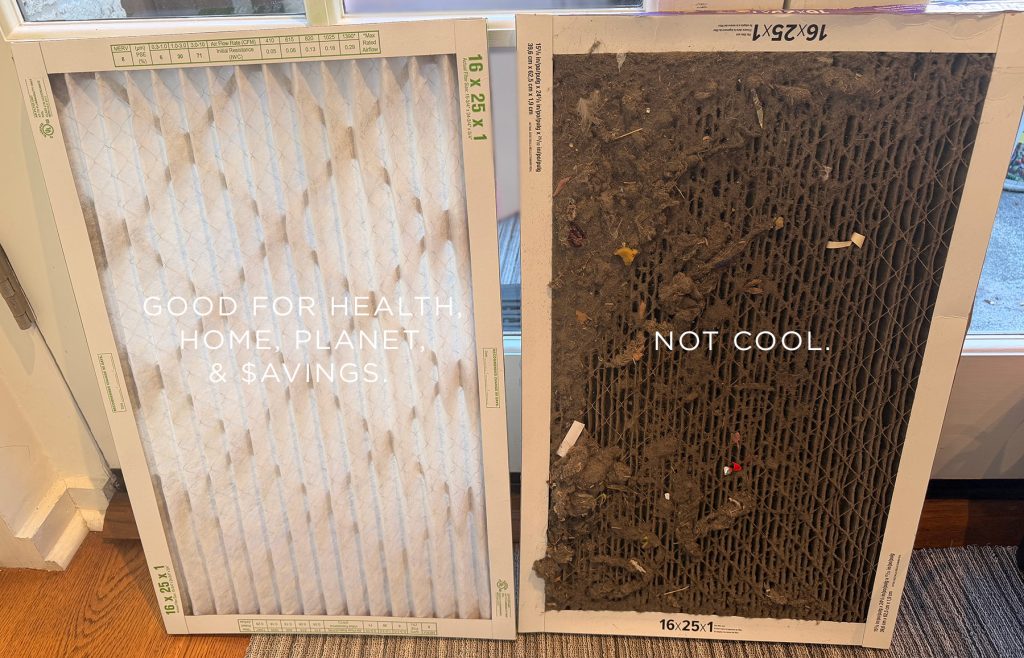
Your furnace filter is the first line of defense for the air inside your home. A clean filter captures dust, pollen, pet dander and mold spores before the system can push them back through your rooms.
Once a filter clogs, it captures less, and more of those particles stay in circulation. For anyone with allergies or asthma, that can mean more congestion, coughing and sneezing. In winter, with the windows closed and all of us spending more time indoors, the air your furnace recirculates is the air you breathe most.
Why it matters for your furnace and your energy bill
A dirty filter restricts airflow, which forces the blower motor to work harder than it should. In some cases the system overheats and shuts itself off as a safety measure, and that always seems to happen on the coldest night of the year.
Restricted airflow also wastes energy. The U.S. Department of Energy estimates that replacing a dirty, clogged filter with a clean one can lower an air conditioner’s energy use by 5 to 15 percent, and a forced-air furnace depends on that same airflow. Less strain on the internal components means less wear, fewer service calls and a longer life for the whole system. A new furnace is a major expense. A filter costs a few dollars.
Why it matters for your home’s value
I look at nearly everything through the lens of home value. When we prepare a home for market, buyers and their inspectors notice the details. A well-maintained furnace tells a buyer the home has been cared for. A dirty filter and a strained system tell them the opposite, and invite questions about what else may have been deferred.
Small, consistent maintenance protects your largest investment long before you ever think about selling. It also makes preparation simpler and calmer when that day comes.
How often should you change your furnace filter?
- Standard 1-inch filters: every 30 to 60 days.
- Thicker 4-inch media filters: about every three months.
- Pets, allergies or a full house: check and change monthly if you have shedding pets, several people at home or family members with allergies.
- Wildfire smoke: check monthly, or more often, while smoke is in the air, and replace as needed.
- When in doubt, look: if the filter is gray with dust or you can’t see light through it, replace it, whatever the calendar says.
Bay Area smoke season: choosing the right filter
Here in the Bay Area, smoke season is a real factor, and filters load up much faster when it arrives. For smoky periods, the EPA recommends a MERV 13 filter, or the highest rating your system can accommodate. Higher-efficiency filters create more airflow resistance, and not every system, particularly an older one, is built for that, so ask an HVAC technician before you upgrade. During Spare the Air alerts from the Bay Area Air District, check your filter often and keep a spare on hand.
How to change a furnace filter in five minutes
- Turn the system off at the thermostat.
- Slide out the old filter and note the size printed on its frame.
- Insert the new filter with the arrow on the frame pointing toward the furnace, in the direction of airflow.
- Write today’s date on the edge of the frame.
- Turn the system back on.
Beating the “out of sight” problem
My furnace isn’t going to move somewhere more convenient, so the answer is to stop relying on memory. A few simple habits make all the difference:
- Set a recurring phone reminder. Tie it to something you already do, like the first of the month.
- Buy filters in bulk and store them beside the furnace. When the next one is already waiting, the job takes five minutes.
- Write the install date on every new filter. You’ll always know exactly how long it’s been.
- Post your filter size near the unit. No more guessing in the hardware store aisle.
Small habits, lasting value
A furnace filter is a small thing, which is exactly why it gets forgotten. But the homes that show best are rarely the result of one big project. They reflect years of small, steady attention. If you’re thinking about selling in the year ahead, that same mindset, thoughtful preparation one detail at a time, is how we approach every home at Cush. [Link: design-driven preparation / Cush Design page]
Frequently Asked Questions
How often should I change my furnace filter? Most homes should replace a standard 1-inch furnace filter every 30 to 60 days and a thicker 4-inch media filter about every three months. Check monthly if you have pets, allergies or a full household, and during wildfire smoke. Your furnace and filter manufacturer’s guidance comes first.
What happens if you don’t change your furnace filter? A clogged furnace filter restricts airflow, which makes the system work harder, use more energy and wear out sooner. It also captures fewer airborne particles, so more dust and allergens stay in your home’s air. In some cases, the furnace can overheat and shut itself off.
What furnace filter should I use during Bay Area wildfire smoke? The EPA recommends a MERV 13 filter, or the highest rating your system can accommodate, during smoky periods. Ask an HVAC technician whether your system can handle the added airflow resistance, and check and replace the filter more often while smoke lingers.
Does changing your furnace filter lower your energy bill? Yes, a clean filter helps a forced-air system run more efficiently. The U.S. Department of Energy estimates that replacing a dirty, clogged filter can lower an air conditioner’s energy use by 5 to 15 percent, and a furnace relies on the same airflow.
Do home inspectors check the furnace filter? Many home inspectors note the furnace filter’s condition when they evaluate the heating system. A clean filter signals a well-maintained home, while a dirty one can prompt questions about what other maintenance has been deferred.