


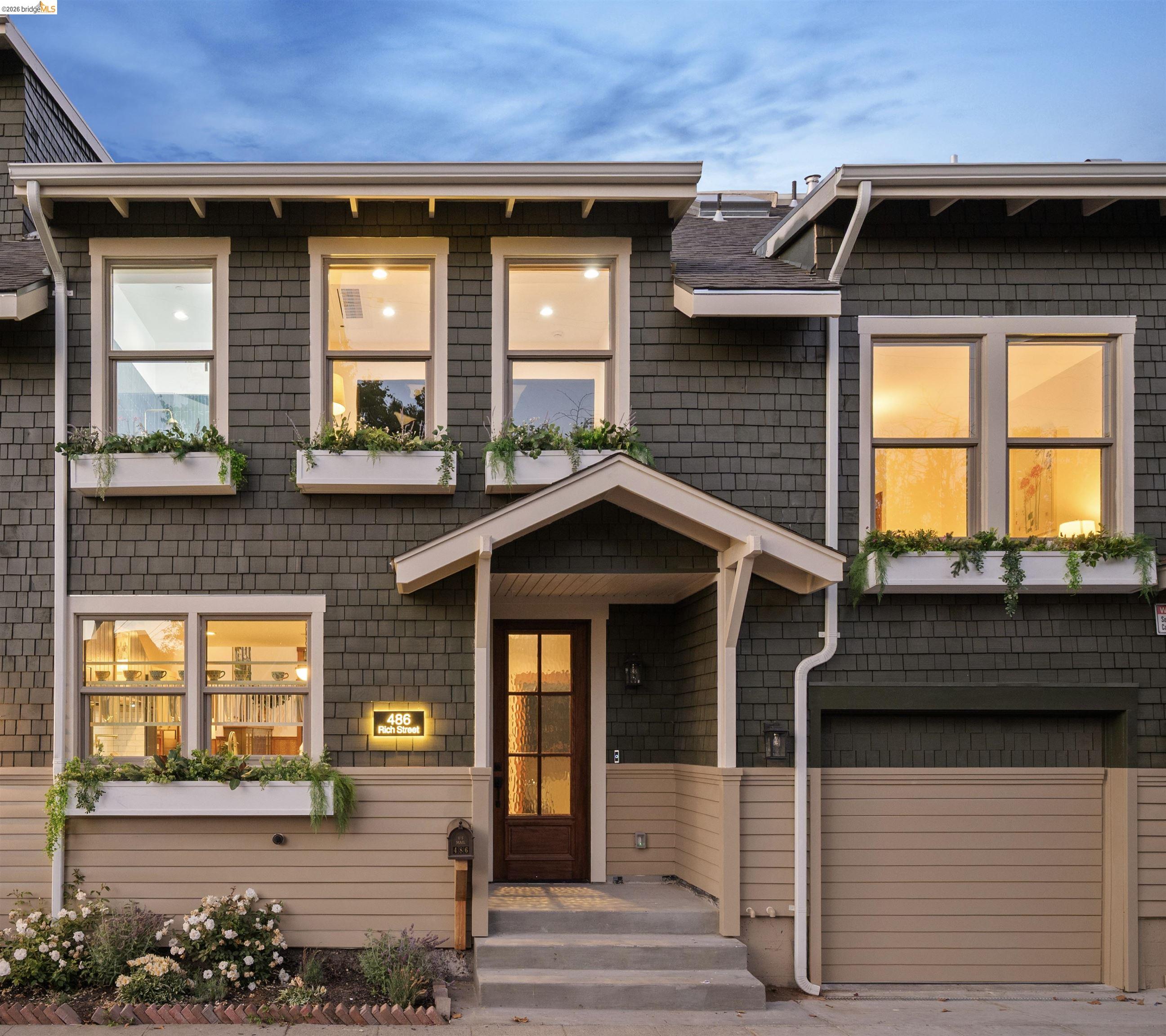


Architectural Appeal
Most Temescal houses were built between about 1900 and the late 1920s, as streetcar lines made the area an easy ride to downtown Oakland. The signature form is the single-story California bungalow: a low gable turned toward the street, a deep front porch on square or tapered columns, and walls of wood siding or shingle. Inside, Craftsman details often survive, including fir or oak floors, brick or tile fireplaces, built-in cabinetry and divided-light windows.
Two-story Craftsman and Colonial Revival houses mix in along many blocks, and stucco homes in the Mediterranean and Spanish Revival manner date mostly to the 1920s. Duplexes and small flats from the same years were usually designed to read as single houses from the sidewalk, so the streetscape stays consistent even where the use changes.
Newer construction is concentrated along Telegraph Avenue and 40th Street, where mixed-use buildings and condominiums have risen near MacArthur BART. Across the neighborhood, careful renovations have opened kitchens, finished lower levels and added garden rooms while leaving period façades intact. The homes that stand out pair original character with updates that feel considered rather than generic.
Pricing & Market Trends
Temescal remains one of North Oakland’s more competitive markets. For the April–June 2026 period, the median sale price was about $1.2 million, up 29 percent from the same period a year earlier, according to Redfin. Homes sold for an average of 111.9 percent of list price, 61 percent sold above asking, and the typical home went under contract in about 18 days. Redfin scores the neighborhood 88 out of 100 for competitiveness.
The median blends condominiums, small multi-unit buildings and single-family houses, so it understates what a prepared house can achieve. This summer, three-bedroom bungalows on 44th Street, 51st Street and Emerald Street closed between about $1.68 million and $1.83 million. Smaller homes and condominiums sold between about $660,000 and $1 million, which gives buyers more than one way into the neighborhood.
Space, Style & Livability
Homes here are generally compact. Many bungalows fall between about 900 and 1,800 square feet with two or three bedrooms, on city lots where a private back garden matters more than a front lawn. Owners often gain space by finishing a lower level or converting an attic, and some lots have room for an accessory dwelling, subject to city rules.
Daily life favors walking, and most blocks are a short stroll from Telegraph Avenue. Parking varies from street to street: some homes have driveways or garages, while others rely on the curb, so buyers should confirm parking for each property.
Who Lives Here
Temescal draws buyers who want to own a house and still walk to coffee, dinner and the train. Two BART stations, Highway 24 and Interstate 580 put San Francisco, Berkeley and Contra Costa County within reach, which suits households that split time between a home office and a commute. Others come for the older houses themselves: original woodwork, porches and gardens, typically at a lower entry price than neighboring Rockridge. Many stay for the small-business district, where shopkeepers know their regulars by name.