
Site Popup

Sign Up For Exclusive Updates

Keep up to date with the latest market trends and opportunities in Oakland.

    Main Content

    Redwood Heights

    Hillside homes along the old road from the redwoods to the bay

    Redwood Heights climbs the hillside where 35th Avenue turns into Redwood Road, between the Laurel District below and Highway 13 above. Its streets, among them Davenport, Harbor View, Fair, Tompkins and Reinhardt, step up the slope in rows of 1920s cottages, late-1930s builder homes and postwar split-levels, many turned west toward the bay.

    The appeal is in the balance. A public elementary school and a city recreation center sit side by side near the neighborhood’s center, a grocery-anchored shopping center waits at the top of the road, and the same road keeps climbing over the ridge to Reinhardt Redwood Regional Park. Two freeways meet near its lower edge, so downtown Oakland and the Bay Bridge stay within easy reach.

    Brief History

    Before there were houses, there was the road. In the mid-1800s, crews felled the old-growth redwoods on the ridge above, and ox teams hauled the lumber downhill along the route that became Redwood Road. Some of those trees had been tall enough to guide ships on the bay; by about 1860 the original forest was gone.

    Homebuilding began in the 1920s with the Avenue Terrace subdivision, which a 1925 advertisement billed as “the Piedmont of East Oakland.” A stone obelisk at 35th Avenue and Victor still marks the old tract. The first Redwood Heights School stood on Bennett Place, where Avenue Terrace Park is today, and a nurseryman named DuBois grew cut flowers on the ground that later became the current school site.

    A second wave followed in the late 1930s. Brothers A.J. and John Flagg built the Sunset Manor homes on Victor Avenue and, in 1939, 29 houses called Redwood Gardens along Detroit Avenue; listings still note when a home is “Flagg-built.” The present school at 39th and Aliso opened in 1950, and Lincoln Square shopping center arrived in 1963.

    Like many East Bay tracts of its era, early Redwood Heights was sold with language meant to keep out nonwhite buyers, and neighborhood histories read the word “Improvement” in the name of the 1944 neighborhood association as coded support for segregation. The neighborhood opened to families of every background in the 1960s. The association later rebuilt itself around the school and shared events, and today’s Redwood Heights Association is a volunteer nonprofit that welcomes residents citywide.

    Brief History
    Real Estate in Redwood Heights

    Architectural Appeal

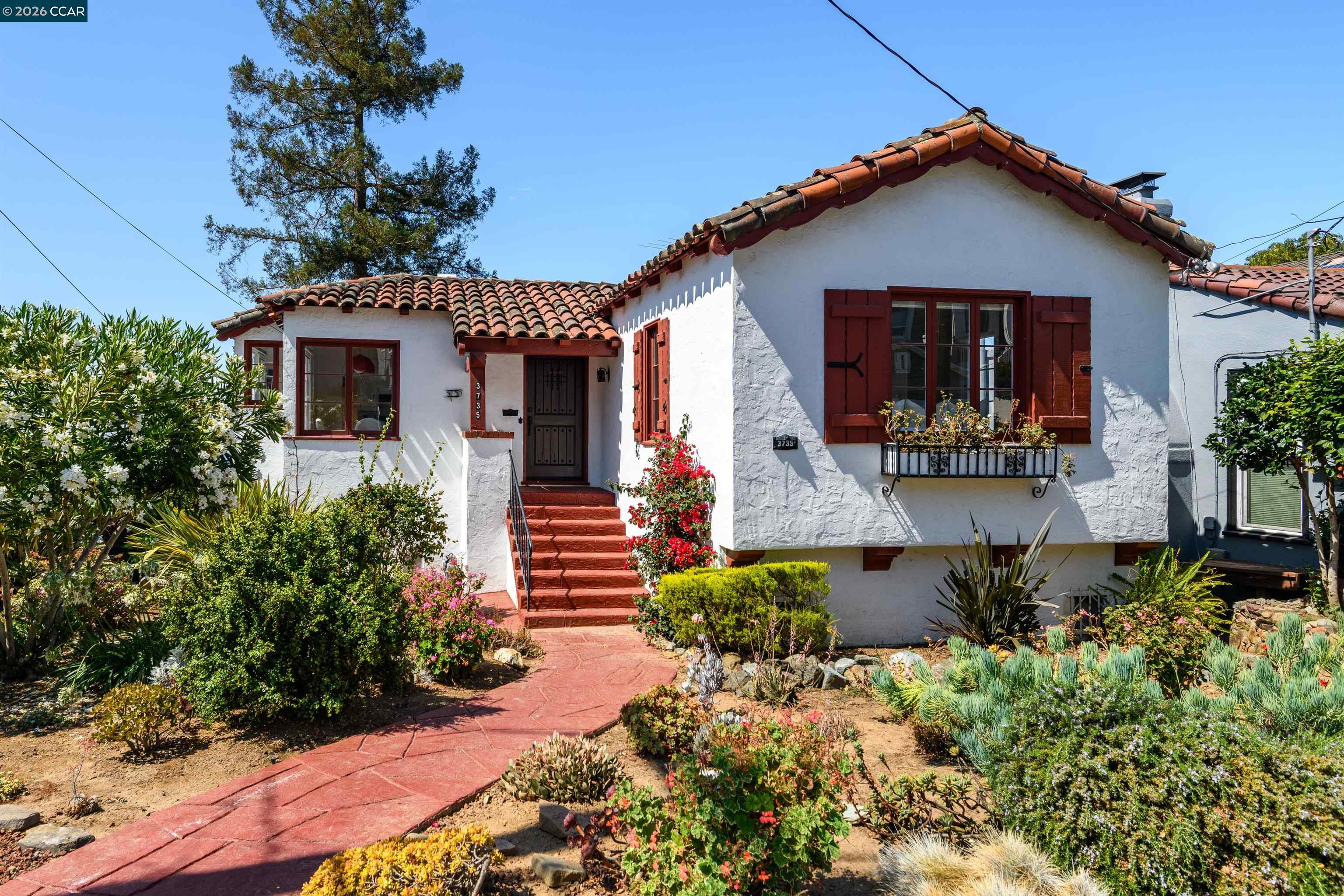
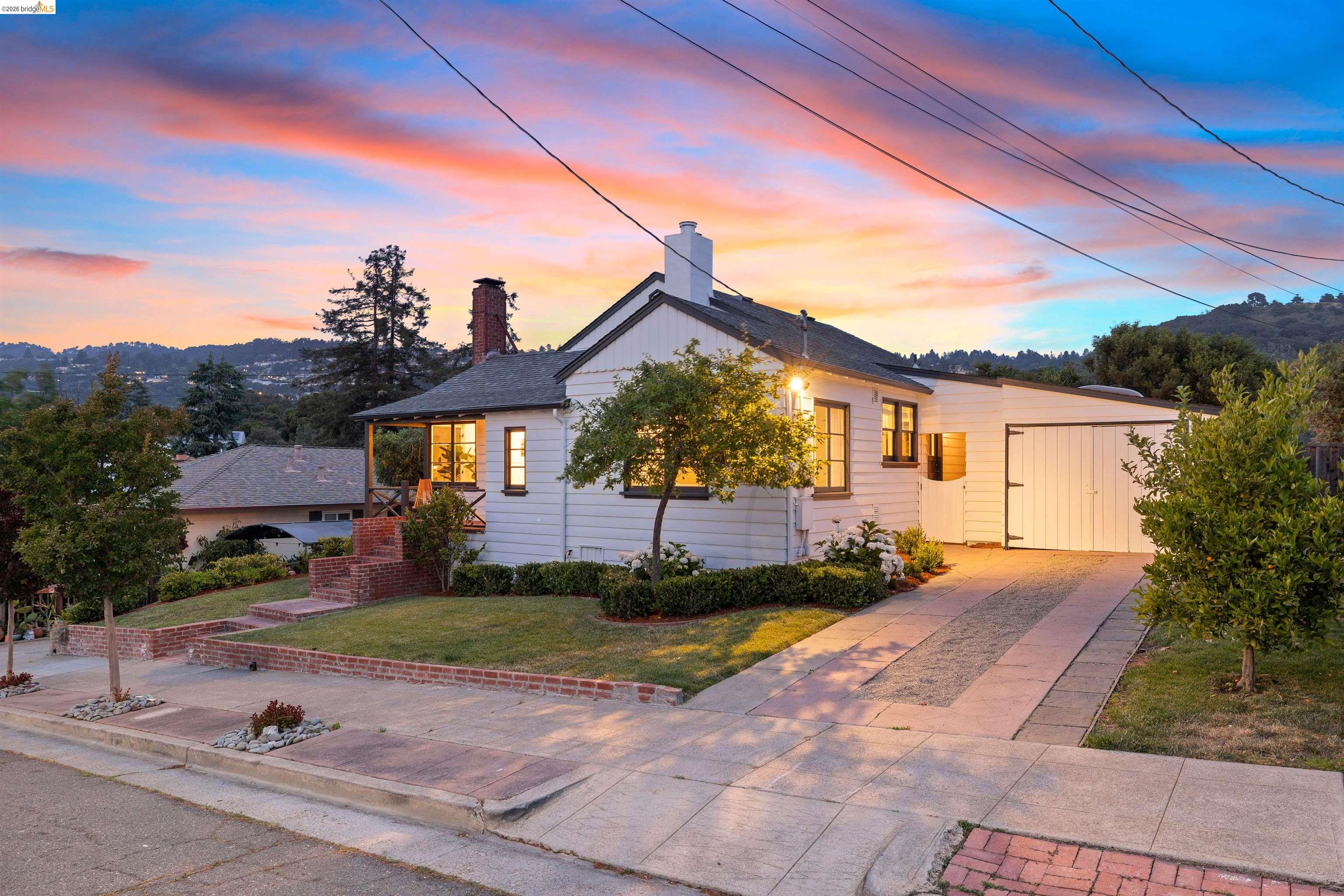
    The housing stock reads like a timeline of Oakland’s hill development. The older Avenue Terrace blocks hold stucco cottages and small Mediterranean and English-revival homes, often with coved ceilings, arched openings and original fireplaces. Farther up and toward Highway 13, Flagg-era houses and 1940s bungalows give way to postwar ranch and split-level designs, many with a garage tucked beneath the main floor and a deck facing west.

    Most homes offer two to four bedrooms in roughly 1,100 to 2,200 square feet. Lots frequently run past 5,000 square feet, which is generous for Oakland, though the grade decides how much of it is usable yard. Lower floors with their own entrances often serve as offices or guest quarters; confirm permit history before counting them as bedrooms.

    Redwood Heights is one of the more competitive hill markets in Oakland right now. For the three months ending August 2026, Redfin reports a median sale price of about $1.24 million and a median of $649 per square foot. Homes spent a median of 19 days on market, closed at 126.5% of list price on average, and nearly nine in ten sold above asking.

    Because only 20 to 25 homes sell here in a typical month, the median price can swing sharply from one quarter to the next; price per square foot, up 4.5% year over year, is the steadier read. The clearer pattern is the spread in outcomes. In late summer 2026, closings ranged from slightly under list price to more than 50% over it, a gap that condition, presentation and pricing strategy largely explain.

    Space, Style & Livability

    The housing stock reads like a timeline of Oakland’s hill development. The older Avenue Terrace blocks hold stucco cottages and small Mediterranean and English-revival homes, often with coved ceilings, arched openings and original fireplaces. Farther up and toward Highway 13, Flagg-era houses and 1940s bungalows give way to postwar ranch and split-level designs, many with a garage tucked beneath the main floor and a deck facing west.

    Most homes offer two to four bedrooms in roughly 1,100 to 2,200 square feet. Lots frequently run past 5,000 square feet, which is generous for Oakland, though the grade decides how much of it is usable yard. Lower floors with their own entrances often serve as offices or guest quarters; confirm permit history before counting them as bedrooms.

    Who Lives Here

    Buyers are drawn by a combination of practical advantages that rarely line up in one Oakland neighborhood: a public elementary school within walking distance of many blocks, a recreation center with after-school programs next door, daily errands at the top of the street and freeway on-ramps at the bottom. Many also come for real yards, westward views and the chance to update a well-built older home on their own terms. Most homes are owner-occupied, and long tenure is common.

    Life in Redwood Heights

    Schools

    Redwood Heights Elementary (K-5), part of Oakland Unified, sits at 4401 39th Avenue at the corner of Aliso, the campus it has occupied since 1950. Many neighborhood addresses continue to Montera Middle School on Ascot Drive and Skyline High School on Skyline Boulevard. Confirm the current assignment for a specific address with Oakland Unified. Head Royce School is a nearby K-12 private school option.

    Getting Around

    Highway 13, the Warren Freeway, runs along the upper edge of the neighborhood, and Interstate 580 is about a mile downhill via 35th Avenue. AC Transit buses serve Redwood Road, with stops near Aliso Avenue and Lincoln Square. Redfin rates the area 55 for walking, 45 for transit and 34 for biking, so most households rely on a car for at least part of the week.

    Cost of Living

    Day-to-day costs follow the home’s price. California’s Proposition 13 sets the base property tax at 1% of the purchase price, with local voter-approved bonds and parcel taxes added on top; ask for the current tax bill on any home you consider. At closing, Alameda County and the City of Oakland each levy a transfer tax, and Oakland’s rate rises in tiers with the sale price. Insurance premiums vary by street and carrier, so request quotes early in escrow.

    Things to Do in Redwood Heights

    Outdoor Activities

    Avenue Terrace Park, a fenced playground at 4369 Bennett Place known locally as Jordan Park, occupies the site of the original school. The recreation center grounds on Aliso Avenue add fields and play space. Peralta Creek runs through Rettig Canyon along Rettig Avenue on its way toward Peralta Creek Park. Drive up Redwood Road and you reach the Redwood Gate entrance of Reinhardt Redwood Regional Park at 7867 Redwood Road, with creekside trails, picnic areas and a state historical landmark at the fish ladder near the gate. Since 2019 it has carried the name of Aurelia Henry Reinhardt, a Mills College president and one of the regional park district’s founding directors in 1934. Joaquin Miller Park and Leona Canyon are also a short drive.

    Art & Culture

    Up on Skyline Boulevard, Chabot Space & Science Center offers telescopes, a planetarium and exhibits for curious kids and adults. Downhill, the Mills College Art Museum hosts exhibitions on the campus now run by Northeastern University. Closer to home, the Avenue Terrace obelisk at 35th and Victor is a small piece of public history worth a stop.

    Shopping & Dining

    Lincoln Square, at 4100 Redwood Road, handles most errands with Safeway, CVS and Peet’s Coffee; the center opened in 1963 and was modernized in 2019. For restaurants and independent shops, residents head about a mile downhill to the Laurel District along MacArthur Boulevard, or over to the Dimond District and Montclair Village.

    Events & Community Life

    The Redwood Heights Association, an all-volunteer nonprofit, organizes much of the neighborhood calendar with the city’s recreation staff. Recent seasons have included free Music in the Park concerts, Movie in the Park evenings, a Family Maker Day for young builders, community blood drives at the recreation center and a fall Plant Share.

    Frequently Asked Questions about Redwood Heights

    Where is Redwood Heights in Oakland?

    Redwood Heights is a residential neighborhood on the lower slopes of the Oakland hills, centered on Redwood Road, the name 35th Avenue takes as it climbs above MacArthur Boulevard. It lies above the Laurel District, roughly between Victor Avenue and Highway 13, a short drive from downtown Oakland.

    What kinds of homes are in Redwood Heights?

    Most Redwood Heights homes were built between the 1920s and the 1950s. The oldest blocks near Avenue Terrace hold stucco cottages and Mediterranean and English-revival homes, while higher streets toward Highway 13 favor late-1930s builder homes, 1940s bungalows and postwar ranch and split-level houses. Typical homes have two to four bedrooms in about 1,100 to 2,200 square feet.

    What is the Redwood Heights housing market like?

    Redwood Heights is a competitive market where most homes sell above their list price. For the three months ending August 2026, Redfin reported a median sale price of about $1.24 million, a median of 19 days on market and an average sale-to-list ratio of 126.5%. Cush refreshes these figures quarterly.

    Which schools serve Redwood Heights?

    Redwood Heights Elementary, an Oakland Unified K-5 school at 4401 39th Avenue, serves much of the neighborhood. Many addresses continue to Montera Middle School and Skyline High School. Confirm the current assignment for a specific address with Oakland Unified.

    How does Redwood Heights compare to Glenview?

    Redwood Heights and Glenview both date to the 1920s, but they offer different daily rhythms. Glenview centers on a walkable commercial strip along Park Boulevard, with a dense run of period homes on gentler blocks. Redwood Heights is hillier and more residential, with homes spanning more decades, many larger lots and bay views, and a school and recreation center at its heart; errands run through Lincoln Square or the Laurel District. Buyers who want to walk to cafes often lean toward Glenview, while those who want yard space and quick access to the regional parks often lean toward Redwood Heights.

    Is Redwood Heights part of Redwood Regional Park?

    Redwood Heights is a residential neighborhood, not part of Reinhardt Redwood Regional Park, which the East Bay Regional Park District runs a few miles farther up Redwood Road. The neighborhood also spans two ZIP codes, 94619 and 94602, so a ZIP code alone does not tell you whether an address is in Redwood Heights; Crestmont is the neighborhood just above Highway 13.

    Who represents homes in Redwood Heights?

    Cush Real Estate by Design, founded by David Higgins, represents homes in Redwood Heights from its nearby base in Crocker Highlands and Glenview. The firm brings design-driven preparation and strategic marketing to each listing, coordinating updates, staging and a tailored launch, and its Park Boulevard office is a short drive away on Highway 13.

    Work With Cush Real Estate by Design

    Park Boulevard and Redwood Road share an origin. Both began as logging roads that carried redwood out of the same hills. Cush works from an office on one of them; Redwood Heights grew up along the other.

    From its base in Crocker Highlands and Glenview, Cush brings design-driven preparation and strategic marketing to Redwood Heights. Here, many well-built homes from the 1930s through the 1950s need focused updates, and recent sales have landed anywhere from below asking to more than 50% above it. Thoughtful preparation is where much of that difference is decided.

    Cush Design walks each home, identifies the updates most likely to pay for themselves, and manages vendors through staging. The Cush Concierge Program can fund qualifying pre-sale work with no upfront cost, repaid when the home sells. Founder David Higgins, one of Oakland’s top-ranked agents and a 20-year resident of nearby Crocker Highlands, leads every engagement.

    Talk with us about your Redwood Heights home at (510) 698 2678 or contact us here.

    Skip to content